Why Choosing a Reliable RTD Sensor Manufacturer Matters
Summarize this blog post with:


Accurate temperature measurement is the bedrock of countless industrial processes. From ensuring the safety of a chemical reaction to guaranteeing the quality of pasteurized milk, precise temperature control is non-negotiable. This is where Resistance Temperature Detector (RTD) sensors come into play. As the demand for high-quality RTD temperature sensors grows, the choice of your supplier becomes more critical than ever. Selecting the right RTD sensor manufacturer is a decision that directly impacts performance, reliability, and your bottom line.
Industrial operations rely on data, and faulty temperature readings can lead to catastrophic failures, costly downtime, and compromised product quality. A dependable partner, a top-tier RTD sensor supplier, ensures that the data you receive is accurate and consistent. This allows you to optimize processes, enhance safety, and maintain a competitive edge. This article will explore why your choice of an RTD sensor manufacturer is so vital for achieving operational excellence.
What Is an RTD Sensor and How Does It Work?
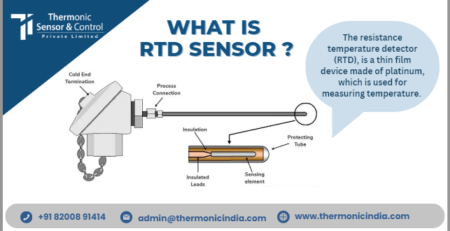
Before diving into manufacturer selection, it’s essential to understand the technology itself. An RTD is a sensor whose resistance changes as its temperature changes. By measuring this resistance, the sensor can provide a highly accurate and stable temperature reading.
Working Principle of RTD Sensors
The core of an RTD sensor is a sensing element made from a pure material, most commonly platinum. Platinum is favored for its stable, linear, and well-understood relationship between resistance and temperature over a wide range. As the platinum element heats up, its electrical resistance increases. This change is predictable and repeatable, allowing for precise temperature calculation. The output from an RTD sensor is exceptionally accurate, making it a preferred choice for applications demanding high precision.
Common Types of RTD Sensors
While the working principle is consistent, RTD sensors come in several configurations to meet diverse industrial needs. Some of the most common types include:
PT100 RTD Sensors
This is the most widely used RTD in industry. The “PT” stands for platinum, and “100” refers to its resistance of 100 ohms at 0°C.
PT1000 RTD Sensors
Similar to the PT100, the PT1000 has a resistance of 1000 ohms at 0°C. This higher resistance makes them more suitable for applications where lead wire resistance could affect accuracy, particularly in two-wire configurations.
Simplex RTD Sensors
A simplex assembly contains a single RTD sensing element inside the protective sheath.
Duplex RTD Sensors
A duplex assembly contains two separate RTD sensing elements within one sheath. This allows for simultaneous measurement, redundancy, or connecting one sensor to a controller and the other to a recording device.
Why RTD Sensors Are Widely Used in Industrial Applications
The prevalence of RTD sensors across industries is no accident. They offer a combination of features that make them ideal for demanding environments. A quality RTD temperature sensor manufacturer will ensure these benefits are fully realized.
High Accuracy and Stability
RTDs are among the most accurate temperature sensors available, providing stable readings over long periods.
Excellent Repeatability
They consistently produce the same resistance value at a given temperature, ensuring reliable and repeatable measurements.
Reliable Long-Term Performance
When constructed properly, RTDs have a very long service life with minimal drift in their readings.
Suitable for Harsh Environments
With robust sheath materials and construction, RTDs can withstand vibration, shock, and corrosive chemicals.
Also Read : Top Industrial Applications of Thermocouples Sensors in 2026
Why Choosing a Reliable RTD Sensor Manufacturer Matters
Partnering with a reputable manufacturer is not just about buying a component; it’s about investing in the reliability of your entire operation. Here’s why that choice is so crucial.
1. Accuracy and Measurement Reliability
Precision in manufacturing is the foundation of an RTD’s accuracy. A leading manufacturer uses automated winding equipment and high-purity platinum to ensure the sensing element meets strict tolerance classes. They adhere to high-quality calibration standards, verifying that each sensor performs exactly as expected. This commitment to precision guarantees consistent sensor performance, eliminating guesswork and providing data you can trust.
2. High-Quality Materials and Construction
The longevity and durability of an RTD sensor depend entirely on the materials used. An experienced manufacturer will only use premium platinum for the sensing element and robust sheath materials like 316 stainless steel or Inconel. This focus on quality construction provides superior resistance to corrosion, vibration, and mechanical shock, which are common challenges in industrial settings. Cheaply made sensors often fail prematurely under such conditions.
3. Customization for Industrial Applications
One size rarely fits all in industrial temperature measurement. A premier RTD sensor manufacturer understands this and offers extensive customization. This includes custom probe lengths to reach specific measurement points, various mounting options like compression fittings or flanges, and different sheath materials for chemical compatibility. They can also provide flexible process connection designs to integrate seamlessly into your existing equipment, ensuring an optimal fit for your unique application.
4. Compliance with Industry Standards
Adherence to recognized standards is a hallmark of a trustworthy manufacturer. Look for certifications like ISO 9001, which demonstrates a commitment to a quality management system. Furthermore, their sensors should comply with international temperature measurement standards, such as IEC 60751. This is verified through rigorous quality testing and validation processes, giving you confidence that the product meets global benchmarks for performance and safety.
5. Longer Sensor Life and Reduced Maintenance
A well-designed sensor from a reputable source is built to last. Durable designs result in lower failure rates, which translates directly to reduced operational downtime and lower maintenance costs. While a premium sensor may have a higher initial cost, the total cost of ownership is significantly lower over its extended lifespan. This is a key consideration for any operation where downtime has major financial implications.
6. Technical Support and Engineering Expertise
A great RTD sensor manufacturer acts as a partner, not just a vendor. Their team should possess deep engineering expertise to assist you in selecting the perfect sensor for your needs. They can provide application-specific recommendations and offer valuable after-sales technical support. This level of service ensures you not only get the right product but also have the support to implement and maintain it effectively.
Industries That Depend on High-Quality RTD Sensors
The need for precise temperature control spans nearly every industrial sector. The right high temperature RTD sensors suppliers are critical partners in these fields.
Power Generation
Monitoring temperatures in turbines, generators, and exhaust systems is crucial for efficiency and safety.
Chemical and Petrochemical
Precise temperature control is essential for managing reactions, distillation processes, and storage.
Pharmaceutical Manufacturing
Sterilization, fermentation, and product stability all rely on exact temperature measurements to meet strict regulatory standards.
Food and Beverage Processing
Pasteurization, brewing, cooking, and refrigeration processes require accurate temperature monitoring for product safety and quality.
Oil and Gas
From upstream extraction to downstream refining, temperature is a critical variable for process control and safety.
Industrial Automation
RTDs provide essential feedback for automated control systems across a wide range of manufacturing applications.
Key Factors to Consider When Selecting an RTD Sensor Manufacturer
When evaluating potential RTD sensor suppliers, use this checklist to guide your decision:
Manufacturing Experience
How long have they been in business? A long history often indicates stability and deep product knowledge.
Product Quality and Testing
Ask about their quality control processes, calibration standards, and material sourcing.
Customization Capabilities
Can they build a sensor that perfectly fits your application’s physical and environmental requirements?
Industry Certifications
Do they hold relevant certifications like ISO 9001 and do their products meet international standards?
Global Supply Capability
If you operate in multiple locations, can they support your needs globally?
Customer Support and Technical Expertise
Is their team responsive, knowledgeable, and willing to help you solve challenges?
Benefits of Partnering with a Trusted RTD Sensor Manufacturer
Making the right choice yields significant, long-term benefits that go far beyond the sensor itself. A partnership with a top-tier high temperature RTD sensors manufacturer delivers tangible results.
Reliable Temperature Monitoring
You gain peace of mind knowing your measurements are accurate and your processes are under control.
Improved Process Efficiency
Stable and precise temperature data allows for process optimization, reducing waste and energy consumption.
Increased Equipment Safety
Early detection of temperature anomalies can prevent equipment damage and ensure a safer working environment.
Better Product Quality Control
Consistent processing temperatures lead to a more uniform and higher-quality end product.
Long-Term Cost Savings
The combination of reduced downtime, lower maintenance needs, and improved efficiency delivers a strong return on investment.
Also Read :What Is a Thermowell and How Does It Work in Industry?
Conclusion : Partner With a Reliable RTD Sensor Manufacturer Today
In the world of industrial processing, accuracy is not a luxury,it is a necessity. RTD sensors are a cornerstone of modern temperature measurement, but their effectiveness is directly tied to the quality of their manufacturing. A reliable RTD sensor manufacturer provides more than just a component; they deliver accuracy, durability, and the expert support needed to ensure your operations run smoothly and efficiently.
By prioritizing quality, customization capabilities, and proven technical expertise, you are not just buying a sensor,you are investing in the long-term health and success of your industrial processes. Take the time to choose a trusted partner for your industrial temperature measurement solutions. It is one of the most important decisions you can make for operational reliability and product quality.