How to Select the Right Conductor Size for RTD Sensors and Thermocouples
Summarize this blog post with:


Introduction
Imagine investing in a high-quality temperature sensor only to discover that inaccurate readings, signal loss, or frequent maintenance issues are affecting your production process. In many industrial applications, the problem is not the sensor itself but the conductor size used in the sensor cable.
Whether you are using RTD sensors or thermocouples, selecting the correct conductor size plays a critical role in ensuring measurement accuracy, signal integrity, and long-term reliability. Even the most advanced temperature monitoring systems can suffer from performance issues when conductor sizing is overlooked.
Temperature measurement is one of the most widely used industrial measurements, and its accuracy directly impacts productivity, product quality, safety, and operational efficiency. According to the National Institute of Standards and Technology (NIST), temperature measurement accuracy significantly influences industrial productivity, process yields, and product quality.
As one of the leading temperature sensors manufacturers, Thermonic India understands that selecting the right conductor size is just as important as selecting the right sensor technology.
In this comprehensive guide, we will explain conductor sizing for RTD sensors and thermocouples, compare common conductor sizes, discuss application-specific requirements, and help you make the best choice for your industrial process.
What Is Conductor Size?
Understanding Conductor Cross-Sectional Area
Conductor size refers to the cross-sectional area of the wire used inside a sensor cable. It is typically measured in square millimeters (sq mm).
Common industrial conductor sizes include:
- 0.2 sq mm
- 0.3 sq mm
- 0.5 sq mm
- 0.75 sq mm
- 1.0 sq mm
- 1.5 sq mm and above
Difference Between Conductor Diameter and Conductor Area
Many users confuse conductor diameter with conductor size.
- Diameter measures the width of the wire.
- Conductor size measures the total cross-sectional area available for electrical current flow.
Since electrical resistance depends on conductor area, conductor size is the more important specification for temperature measurement systems.
Why Conductor Size Matters
Selecting the correct conductor size impacts several performance factors.
Electrical Resistance Considerations
Smaller conductors have higher resistance, which can introduce measurement errors, particularly in RTD sensors.
Signal Transmission Efficiency
Larger conductors reduce signal loss over long distances and help maintain signal integrity.
Mechanical Strength and Durability
Thicker conductors provide:
- Better flexibility
- Improved durability
- Higher resistance to vibration
- Longer service life
Installation and Maintenance Requirements
Proper conductor sizing simplifies installation while minimizing future maintenance issues.
Understanding RTD Sensors and Thermocouples
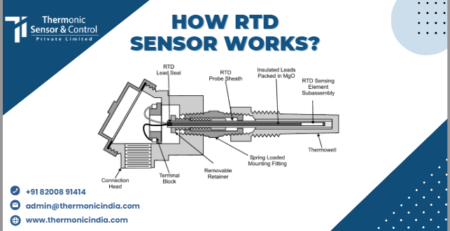
How RTD Sensors Work
Resistance Temperature Detectors (RTDs) measure temperature by monitoring changes in electrical resistance.
The most common RTD used in industry is the PT100 temperature sensor, which provides excellent accuracy and repeatability.
Importance of Lead Wire Resistance
Lead wire resistance can significantly affect RTD measurement accuracy.
For this reason:
- Larger conductors are preferred for longer cable runs.
- Three-wire and four-wire configurations are often used to compensate for lead resistance.
Typical RTD Wiring Configurations
- 2-wire RTD
- 3-wire RTD
- 4-wire RTD
Each configuration offers different levels of accuracy and compensation.
How Thermocouples Work
Thermocouples generate a small voltage when two dissimilar metals experience a temperature difference.
Thermoelectric Voltage Generation
The generated signal is typically measured in millivolts, making it highly sensitive to transmission conditions.
Signal Sensitivity Considerations
Because thermocouple signals are extremely small, conductor selection becomes critical for reliable transmission.
Importance of Extension and Compensation Cables
Leading thermocouple manufacturers in India recommend using properly matched extension and compensation cables to maintain measurement accuracy.
Also Read : Best RTD Sensors for Industrial Temperature Monitoring Applications
Common Conductor Sizes Used in Temperature Sensors
0.2 sq mm Conductor
Suitable Applications
- Compact sensors
- Laboratory instruments
- Short-distance installations
Advantages
- Lightweight
- Flexible
- Cost-effective
Limitations
- Higher resistance
- Limited mechanical strength
0.3 sq mm Conductor
Typical Industrial Uses
- General process monitoring
- OEM equipment
Performance Characteristics
- Improved signal performance
- Better durability than 0.2 sq mm
0.5 sq mm Conductor
Most Commonly Used Applications
This is one of the most popular conductor sizes for industrial RTDs and thermocouples.
Benefits
- Good balance of cost and performance
- Suitable for medium cable lengths
- Reliable signal transmission
0.75 sq mm Conductor
Improved Mechanical Strength
Provides enhanced durability for demanding environments.
Suitable Environments
- Manufacturing plants
- Heavy machinery
- Outdoor installations
1.0 sq mm Conductor
Long-Distance Signal Transmission
Ideal where sensors are installed far from control panels.
Industrial Process Applications
- Chemical plants
- Power plants
- Steel manufacturing
1.5 sq mm and Above
Heavy-Duty Industrial Installations
Used where maximum durability and signal stability are required.
Recommended For
- High-vibration applications
- Long cable routes
- Harsh industrial environments
Factors to Consider When Selecting Conductor Size
Installation Distance
Short Cable Runs
- 0.2 sq mm
- 0.3 sq mm
Medium Cable Runs
- 0.5 sq mm
- 0.75 sq mm
Long Cable Runs
- 1.0 sq mm and above
Impact of Cable Resistance
Longer cable lengths increase resistance, potentially affecting measurement accuracy.
Operating Temperature
High-Temperature Environments
Choose conductors with suitable insulation and thermal stability.
Low-Temperature Environments
Ensure flexibility and resistance to thermal contraction.
Sensor Type
RTD Sensor Requirements
RTDs are highly sensitive to lead resistance.
Thermocouple Requirements
Thermocouples require stable signal transmission with minimal interference.
Differences in Selection
RTDs often benefit from larger conductors than thermocouples operating at similar distances.
Environmental Conditions
Consider:
Moisture Exposure
Use moisture-resistant cable construction.
Chemical Exposure
Select chemically resistant insulation materials.
Mechanical Stress
Larger conductors provide better durability.
Vibration and Movement
Heavy-duty conductor sizes improve reliability.
Signal Integrity Requirements
Noise Reduction
Proper conductor sizing helps reduce electrical noise.
Electromagnetic Interference (EMI)
Industrial environments often generate EMI.
Shielding Considerations
Use shielded cables when required to protect low-level sensor signals.
How Conductor Size Affects RTD Sensor Performance
Lead Wire Resistance
Every meter of cable adds resistance.
Impact on Measurement Accuracy
Excessive resistance can introduce temperature reading errors.
Error Generation Mechanisms
- Cable resistance
- Connection resistance
- Temperature-induced resistance changes
Accuracy and Stability
Proper conductor sizing helps maintain:
- Consistent readings
- Process stability
- Calibration integrity
Cable Length Considerations
The longer the cable, the larger the conductor should generally be.
Best Practices
- Minimize cable length where possible
- Use 3-wire or 4-wire RTDs
- Select appropriate conductor sizes
How Conductor Size Affects Thermocouple Performance
Voltage Signal Transmission
Thermocouples generate very small millivolt signals.
Signal Loss Prevention
Larger conductors help maintain signal quality over extended distances.
Extension and Compensation Cables
Importance of Matching Specifications
Always use cable materials compatible with the thermocouple type.
Common Mistakes
- Using incorrect extension cable
- Ignoring conductor size requirements
- Mixing thermocouple types
Response Reliability
Proper conductor sizing ensures:
- Stable measurements
- Reduced signal distortion
- Improved process control
Conductor Size Selection Guide by Application
Food Processing Industry
Recommended Sizes
- 0.5 sq mm
- 0.75 sq mm
Environmental Considerations
- Washdown resistance
- Moisture protection
Plastic Extrusion Industry
Suitable Configurations
- Thermocouples with 0.5 to 1.0 sq mm conductors
Temperature Requirements
Suitable for continuous high-temperature operation.
Furnace and Kiln Applications
High-Temperature Requirements
Heavy-duty cables with larger conductor sizes.
Recommended Sizes
- 1.0 sq mm
- 1.5 sq mm
Pharmaceutical Industry
Accuracy Requirements
RTDs often preferred.
Hygienic Considerations
Use stainless steel assemblies with appropriate conductor sizing.
Chemical Processing Plants
Corrosion Resistance
Select suitable insulation and protective sheathing.
Mechanical Protection
Use reinforced cable designs where necessary.
Common Mistakes When Choosing Conductor Size
Avoid these common errors:
- Selecting based solely on cost
- Ignoring cable length
- Overlooking environmental conditions
- Using undersized conductors in industrial environments
- Not considering RTD and thermocouple differences
Also Read : Thermocouple Wire Types and Their Importance in Temperature Measurement
Conductor Size Comparison Table
| Conductor Size | Typical Application | Distance Suitability | Mechanical Strength |
| 0.2 sq mm | Compact sensors | Short | Low |
| 0.3 sq mm | General sensing | Short to Medium | Moderate |
| 0.5 sq mm | Industrial RTDs | Medium | Good |
| 0.75 sq mm | Heavy-duty applications | Medium to Long | Better |
| 1.0 sq mm | Long-distance installations | Long | High |
| 1.5 sq mm+ | Harsh industrial environments | Very Long | Very High |
Best Practices for Selecting the Right Conductor Size
Follow these guidelines:
- Assess installation distance first
- Evaluate environmental conditions
- Consider sensor technology
- Match cable specifications to process requirements
- Consult experienced temperature sensor manufacturers
Why Choose a Reliable Temperature Sensor Manufacturer?
Benefits of Expert Guidance
Working with experienced manufacturers provides:
- Custom conductor size recommendations
- Application-specific engineering support
- Improved measurement accuracy
- Enhanced long-term reliability
How Thermonic India Supports Industrial Applications
As an experienced industrial temperature sensor factory, Thermonic India provides customized temperature sensing solutions for a wide range of industries.
Our capabilities include:
Custom RTD Sensor Manufacturing
- PT100 RTDs
- Mineral insulated RTDs
- Surface temperature RTDs
Thermocouple Design Expertise
- J Type Thermocouples
- K Type Thermocouples
- High-temperature furnace thermocouples
Industry-Specific Solutions
- Plastic processing
- Pharmaceutical manufacturing
- Food processing
- Chemical plants
- Power generation
Quality-Tested Sensor Assemblies
Every sensor assembly undergoes rigorous quality testing to ensure accuracy, durability, and dependable field performance.
Need Help Selecting the Right Conductor Size for RTD Sensors and Thermocouples?
Choosing the right conductor size for RTD sensors and thermocouples is a critical step in achieving accurate and reliable temperature measurement. Factors such as cable length, operating environment, sensor type, and mechanical requirements should all be carefully evaluated before making a selection.
A properly sized conductor improves signal integrity, reduces measurement errors, extends sensor life, and helps maintain stable industrial processes. While smaller conductors may reduce initial costs, the long-term benefits of selecting the correct conductor size far outweigh the savings.
If you need expert guidance in selecting the ideal RTD sensor, thermocouple, or conductor configuration for your application, contact Thermonic India today. Our engineering team can help you choose the most reliable and cost-effective temperature sensing solution for your process.