
PT100 Sensor Accuracy: Class A vs Class B, Tolerance and Calibration
Introduction: Why PT100 Sensor Accuracy Matters
Accurate temperature measurement is essential for maintaining product quality, process stability, and equipment safety across industries. A PT100 temperature sensor is widely used in industrial applications because it offers reliable temperature measurement through changes in electrical resistance.
Understanding PT100 temperature sensor accuracy helps engineers choose the right sensor for their operating conditions. Accuracy classes such as Class A, Class B, and Class AA define different tolerance limits, while proper calibration helps verify measurement performance.
As an industrial PT100 RTD sensor supplier, Thermonic India provides temperature sensing solutions for applications that require dependable measurement and process control.
Learn more about our PT100 RTD sensors for industrial temperature measurement. For technical background on temperature measurement standards, refer to the International Electrotechnical Commission (IEC).
What Is PT100 Sensor Accuracy?
➯ How Does a PT100 Sensor Work?
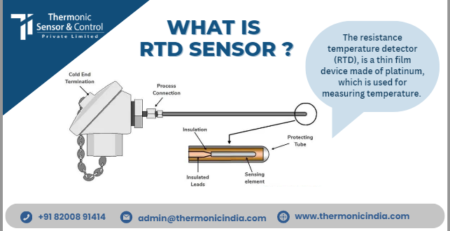
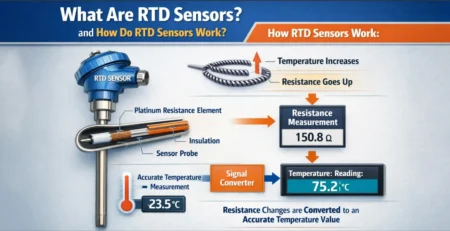
A PT100 sensor is a resistance temperature detector (RTD) that uses platinum as its sensing element. Its nominal electrical resistance is 100 ohms at 0°C.
- As temperature increases, the resistance of the platinum element increases.
- As temperature decreases, its resistance decreases.
- A compatible temperature transmitter, controller, or measuring instrument converts resistance into a temperature reading.
A 100 ohm RTD sensor is commonly used where stable and repeatable temperature measurement is required.
➯ What Does PT100 Accuracy Mean?
- Define PT100 sensor accuracy as how closely the measured temperature represents the actual temperature.
- Explain sensor tolerance as the permitted deviation specified for a particular sensor class.
- Differentiate accuracy from repeatability, which describes the consistency of repeated measurements.
- Explain resolution as the smallest change displayed or detected by the measuring instrument.
- Clarify that the complete measurement system may have additional errors beyond the sensing element’s tolerance.
➯ Why Is PT100 Accuracy Important in Industrial Applications?
- Helps maintain consistent product quality.
- Supports reliable temperature control in manufacturing processes.
- Reduces the risk of incorrect process readings.
- Helps maintain required operating conditions in pharmaceutical and chemical industries.
- Supports temperature monitoring in food processing, machinery, and industrial equipment.
PT100 Class A vs Class B vs Class AA
➯ What Are PT100 Accuracy Classes?
- Introduce IEC 60751, the standard covering industrial platinum resistance thermometers and their resistance-temperature characteristics.
- Explain that accuracy classes specify tolerance limits for the sensing element.
- Describe how Class AA, Class A, and Class B differ in permitted temperature deviation.
- Explain that the applicable class must be considered alongside the sensor’s specified operating range and construction.
➯ Class A vs Class B vs Class AA Comparison
| Feature | Class AA | Class A | Class B |
| Relative tolerance | Tightest | Tighter than Class B | Wider |
| Typical use | Applications with demanding tolerance requirements | General precision measurement | General industrial measurement |
| Selection priority | High measurement precision | Balanced precision and application needs | Cost-effective measurement where tolerance permits |
| Main consideration | Specified temperature range and system performance | Installation and instrument accuracy | Whether the permitted deviation meets process requirements |
➯ PT100 Accuracy Tolerance Formula
Explain the commonly used IEC 60751 tolerance equations:
- Class AA: ±(0.10 + 0.0017 × |t|) °C
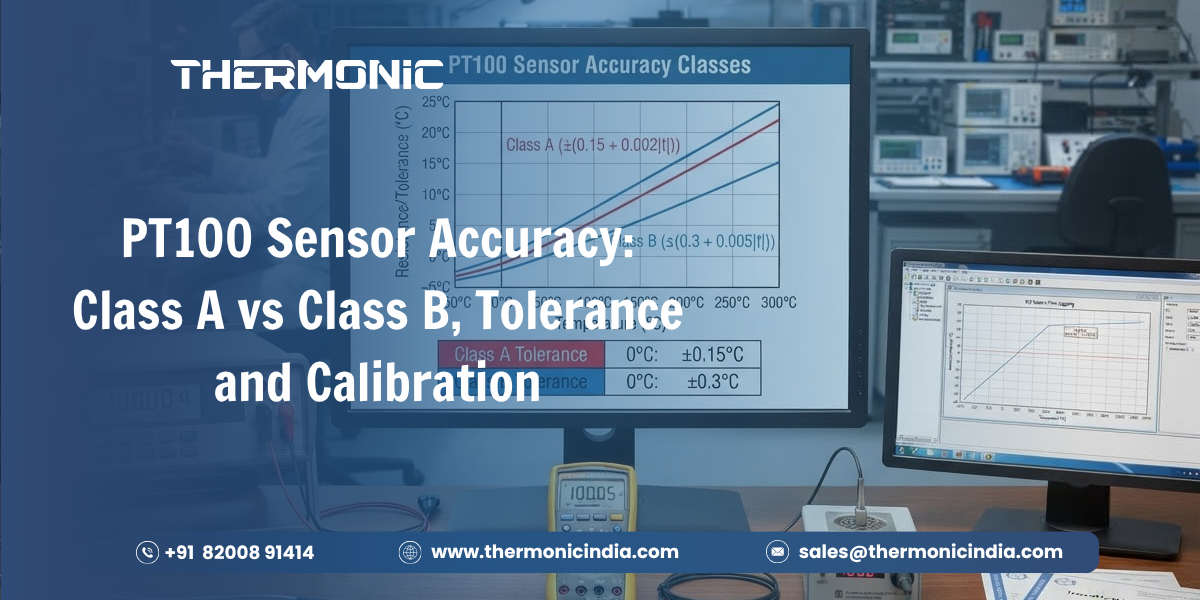
- Class A: ±(0.15 + 0.002 × |t|) °C
- Class B: ±(0.30 + 0.005 × |t|) °C
Here, t represents the temperature in degrees Celsius, and |t| is its absolute value.
Explain that these equations apply within each class’s specified temperature range. Common IEC 60751 ranges are −50°C to +250°C for Class AA, −100°C to +450°C for Class A, and −196°C to +600°C for Class B. Confirm the applicable standard edition and the manufacturer’s stated limits before specifying a sensor.
➯ Which PT100 Accuracy Class Should You Choose?
- Select the class based on the maximum allowable measurement error.
- Consider the normal and extreme operating temperatures.
- Check the measuring instrument’s accuracy and compatibility.
- Consider wiring configuration and installation conditions.
- Balance the required performance with procurement and maintenance costs.
PT100 Sensor Tolerance at Different Temperatures
➯ PT100 Tolerance at 0°C
- Compare Class AA, Class A, and Class B tolerance limits.
- Explain why 0°C is a useful reference point for a PT100 element.
- Show how the three classes differ in their permitted deviation.
➯ PT100 Tolerance at 100°C
- Calculate the tolerance for each class at 100°C.
- Explain how tolerance increases with temperature.
- Describe how these limits help engineers select a suitable sensor.
➯ PT100 Tolerance at 200°C
- Compare the permitted deviation for each class.
- Explain why the sensor’s specified class range matters at higher temperatures.
- Discuss the importance of checking the sensor’s construction and operating environment.
➯ PT100 Accuracy Tolerance Chart
| Temperature | Class AA | Class A | Class B |
| 0°C | ±0.10°C | ±0.15°C | ±0.30°C |
| 100°C | ±0.27°C | ±0.35°C | ±0.80°C |
| 200°C | ±0.44°C | ±0.55°C | ±1.30°C |
Explain that these values represent sensing-element tolerance limits under the applicable standard. They do not guarantee the total installed system accuracy, which also depends on the transmitter, wiring, calibration, and installation.
What Factors Affect PT100 Sensor Accuracy?
➯ Lead-Wire Resistance
- Explain how resistance in connecting wires can affect readings.
- Compare 2-wire, 3-wire, and 4-wire configurations.
- Describe how 3-wire and 4-wire arrangements can reduce the influence of lead resistance when used with compatible instruments.
➯ Sensor Installation and Placement
- Explain why adequate insertion depth and thermal contact matter.
- Discuss heat transfer through the probe and surrounding material.
- Describe how incorrect positioning can produce readings that do not represent the actual process temperature.
➯ Temperature Transmitter and Measuring Instrument
- Explain the importance of instrument accuracy and compatibility.
- Discuss correct sensor-type selection and transmitter configuration.
- Explain how calibration and measurement uncertainty affect the final reading.
➯ Sensor Ageing and Operating Conditions
- Discuss possible sensor drift after prolonged operation.
- Explain the effects of excessive temperature, vibration, moisture, and mechanical damage.
- Highlight the importance of selecting a sensor suitable for the application environment.
➯ Sensor Construction and Quality
- Cover sensing-element quality and manufacturing consistency.
- Explain the role of sheath material, insulation, and probe design.
- Discuss why the right industrial PT100 sensor specification matters for long-term measurement reliability.
How to Calibrate a PT100 Temperature Sensor
➯ What Is PT100 Sensor Calibration?
- Define calibration as comparing a sensor’s readings with a suitable reference.
- Explain how calibration helps identify measurement deviations.
- Distinguish calibration from adjustment or repair.
➯ Equipment Required for Calibration
- A reference thermometer with suitable accuracy and uncertainty.
- A calibrated dry-block temperature calibrator or temperature-controlled liquid bath.
- Suitable resistance measurement equipment or a compatible readout.
- Correct electrical connections and calibration records.
➯ Step-by-Step PT100 Calibration Procedure
- Inspect the sensor, probe, and electrical connections.
- Connect the sensor to compatible measuring equipment.
- Stabilise the sensor and reference at the selected temperature.
- Compare the sensor reading with the reference value.
- Record the deviation at each test point.
- Evaluate the results against the required tolerance.
- Adjust the instrument only when necessary and appropriate.
- Document the results and determine whether further action is required.
➯ How Often Should You Calibrate a PT100 Sensor?
- Consider process criticality and allowable measurement uncertainty.
- Review operating conditions and previous calibration results.
- Follow applicable quality-system requirements.
- Set calibration intervals according to risk, sensor history, and process requirements rather than relying on one fixed interval for every application.
Common PT100 Accuracy Problems and How to Fix Them
➯ Incorrect Wiring Configuration
- Explain how incorrect connections can cause measurement errors.
- Recommend verifying the wiring arrangement and instrument settings.
➯ Loose or Corroded Electrical Connections
- Discuss unstable readings caused by poor connections.
- Recommend inspecting terminals and connection points.
➯ Incorrect Transmitter Settings
- Explain how selecting the wrong RTD type or wiring mode affects readings.
- Recommend checking configuration against the sensor specification.
➯ Poor Sensor Placement or Insufficient Immersion
- Explain how poor thermal contact affects measurement.
- Recommend reviewing insertion depth and installation location.
➯ Sensor Damage or Calibration Drift
- Discuss changes caused by ageing or harsh operating conditions.
- Recommend inspection, calibration, and replacement when necessary.
PT100 vs Thermocouple: Which Offers Better Accuracy?
➯ Understanding the Difference
- Explain that PT100 sensors measure changes in platinum resistance.
- Explain that thermocouples generate a voltage related to the temperature difference between their junctions.
- Describe their different operating principles and measurement requirements.
➯ Accuracy Comparison
Compare the technologies based on:
- Specified sensor tolerance.
- Operating temperature range.
- Measurement-system accuracy.
- Response time and installation requirements.
- Calibration and maintenance needs.
➯ Which Sensor Is Suitable for Your Application?
- Discuss PT100 RTD sensors for applications requiring stable measurement within their operating range.
- Discuss thermocouples for applications that require suitable designs for higher temperatures or demanding environments.
- Explain that actual performance depends on sensor grade, construction, instrumentation, and installation.
How to Select a High-Accuracy PT100 Sensor for Your Application
➯ Define Your Temperature Range
- Identify minimum, normal, and maximum process temperatures.
- Confirm that the selected accuracy class is suitable for the full operating range.
➯ Choose the Right Accuracy Class
- Compare Class AA, Class A, and Class B tolerance limits.
- Select a class that meets the process’s allowable measurement error.
➯ Select the Correct Wiring Configuration
- Consider 2-wire, 3-wire, or 4-wire connections.
- Check compatibility with the temperature transmitter or controller.
➯ Check Probe Construction and Materials
- Consider probe dimensions, sheath material, process connection, and environmental conditions.
- Confirm that the design suits the application.
➯ Consider Calibration and Maintenance
- Determine calibration requirements.
- Review expected operating conditions and service life.
- Confirm that the complete measurement system meets the required performance.
Frequently Asked Questions About PT100 Sensor Accuracy
➯ How accurate is a PT100 temperature sensor?
– Explain that accuracy depends on the tolerance class, operating temperature, measuring instrument, wiring, and installation.
➯ Which is more accurate, PT100 Class A or Class B?
– Explain that Class A has tighter standard tolerance limits than Class B within their applicable ranges.
➯ What is the tolerance of a Class A PT100 sensor?
– Provide the Class A tolerance equation and a worked example at 100°C.
➯ Is a 4-wire PT100 more accurate than a 3-wire PT100?
– Explain how 4-wire measurement can better compensate for lead-wire resistance, depending on the instrument and setup.
➯ Can a PT100 sensor lose accuracy over time?
– Explain sensor drift and the influence of operating conditions, ageing, and mechanical stress.
➯ How often should a PT100 sensor be calibrated?
– Explain why the interval depends on process criticality, historical results, and measurement requirements.
➯ What is the difference between PT100 accuracy and resolution?
– Explain why a display showing 0.1°C increments does not necessarily mean the measurement is accurate to ±0.1°C.
➯ What is the accuracy of a PT100 temperature sensor in motors?
- Explain that motor temperature monitoring accuracy depends on the PT100 element’s class, installation location, wiring, and monitoring equipment.
- Discuss the importance of selecting a suitable sensor for winding, bearing, or other motor temperature measurement applications.
- Avoid promising one universal accuracy value for all motor installations.
Choose the Right PT100 Sensor for Reliable Temperature Measurement
Accurate temperature measurement depends on selecting the right sensor class, ensuring correct installation, and maintaining a suitable calibration process. Understanding PT100 tolerance limits helps engineers choose a sensor that meets their process requirements.
As a PT100 sensor manufacturer, Thermonic India offers industrial temperature sensing solutions for different measurement requirements. Selecting a suitable PT100 RTD sensor involves considering the operating temperature, required tolerance, wiring configuration, probe design, and compatible measuring instrument.
Whether you need a sensor for motor temperature monitoring or general industrial process control, choosing the right specification can help support reliable and consistent measurements.






Leave a Reply