How Temperature Sensors Work: A Complete Beginner’s Guide
Introduction
Temperature is something we often take for granted, but in reality, it plays a critical role in how the world functions. From keeping food safe to ensuring machines run smoothly, accurate temperature measurement is essential.
So, how temperature sensors work in real life is more important than most people realize. A temperature sensor is a device that detects heat and helps systems understand how hot or cold something is. This information is then used to control processes, maintain safety, and improve efficiency.
If you are wondering how does a temperature sensor work or how do temperature sensors work in industrial environments, the answer lies in how materials react to heat and how those reactions are converted into useful signals.
In industries such as manufacturing, pharmaceuticals, HVAC, and food processing, temperature monitoring is not optional. It is a necessity. According to the International Energy Agency, improving industrial efficiency, including better temperature monitoring, can reduce global energy consumption by more than 12%.
Temperature sensors are commonly used in:
- Manufacturing for process control
- HVAC systems for climate regulation
- Food industries for safety and storage
- Pharmaceutical production for precision
Because of this growing demand, businesses rely on experienced temperature sensors manufacturers to provide reliable and application-specific solutions.
What Is a Temperature Sensor?
Before going deeper, let’s understand the basics.
A temperature sensor is a device that detects temperature and converts it into a readable signal. This signal is usually electrical and is sent to a system that displays or uses the data.
If you are asking how does temperature sensor work in simple terms, think of it like an advanced thermometer. The difference is that a temperature sensor does not just display the temperature. It helps machines react to it automatically.
In simple steps:
- It senses temperature changes
- Converts them into electrical or mechanical signals
- Sends those signals to a monitoring system
This is the foundation of how temperature sensors work in both simple and complex applications.
Why Temperature Measurement Is Important
Understanding how do temperature sensors work is only part of the picture. Knowing why they matter is equally important.
Key reasons:
- Safety
Prevents overheating, equipment damage, and dangerous situations - Product Quality
Ensures consistency in industries like food and pharmaceuticals - Efficiency
Helps reduce energy waste and optimize performance - Automation
Enables systems to make real-time decisions
Even a small temperature variation can lead to major problems. That is why accurate sensing is critical in modern industries.
Also Read : Choosing the Right Materials for Temperature Sensors in Harsh Industries
Basic Working Principle of Temperature Sensors
Now let’s answer the core question more clearly: how do the temperature sensors work?
Temperature sensors work because materials respond to heat. When temperature changes, certain physical properties of materials also change. These changes are then converted into signals that systems can understand.
Main ways this happens:
- Change in resistance
Metals like platinum increase resistance as temperature rises - Generation of voltage
Two different metals can create voltage when heated - Expansion of materials
Some materials expand or contract with temperature
So, when people ask how does temperature sensors work or how temperature sensors work in practical terms, the answer always comes back to these physical reactions.
Types of Temperature Sensors (With Working Principles)
Different applications require different types of sensors. Let’s break them down.
1. Thermocouples
Thermocouples are widely used in industrial environments.
They work based on the Seebeck effect, where two different metals produce voltage when exposed to heat.
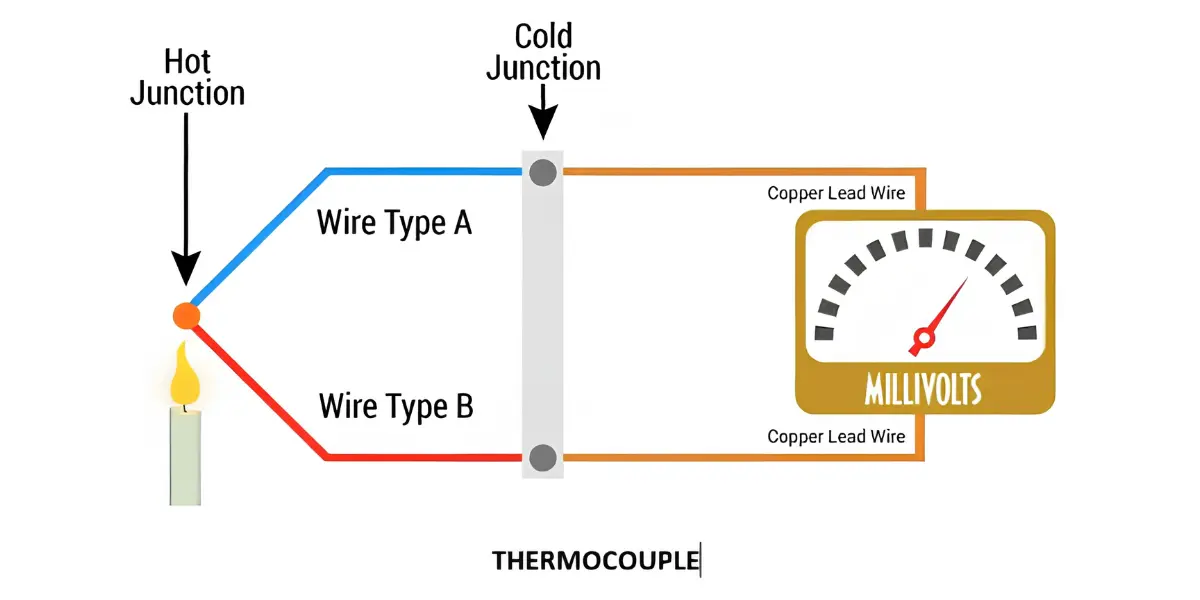
If you are asking how do temperature sensors work in high temperature environments, thermocouples are often the answer.
Key features:
- Wide temperature range
- Fast response
- Durable in harsh conditions
Used in:
- Furnaces
- Kilns
- Engines
2. RTDs (Resistance Temperature Detectors)
RTDs measure temperature by tracking changes in electrical resistance.
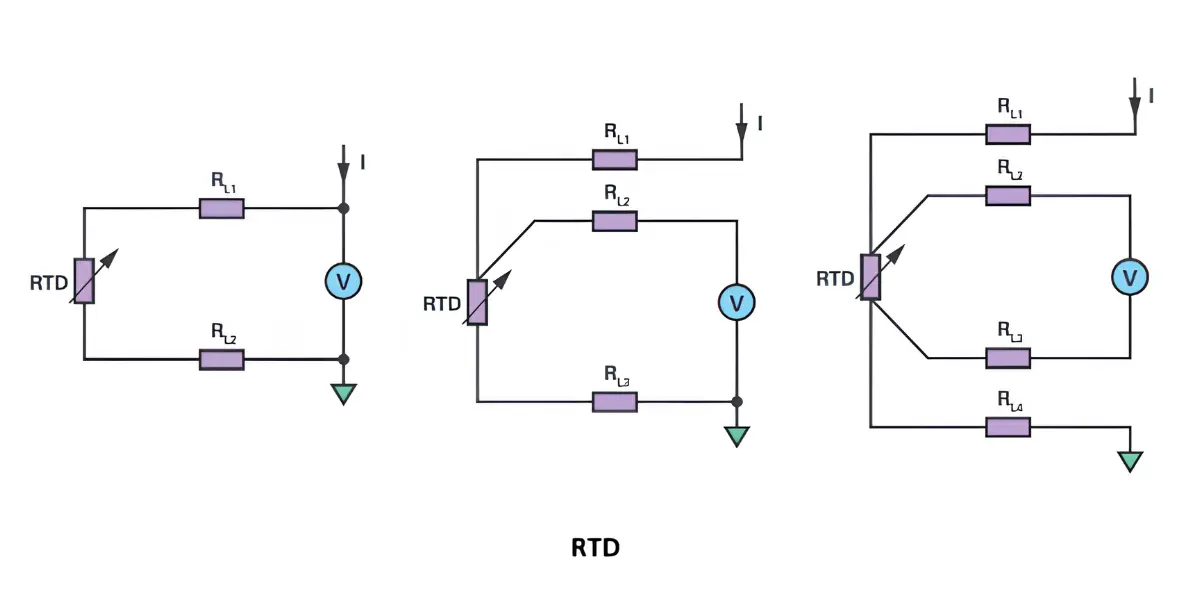
If you are wondering how does a temperature sensor work with high accuracy, RTDs are a great example.
Key features:
- High accuracy
- Stable readings
- Long-term reliability
Used in:
- Laboratories
- Pharmaceutical industries
- Precision processes
3. Thermistors
Thermistors are highly sensitive sensors that react quickly to temperature changes.
If the question is how do temperature sensors work in small electronic devices, thermistors are commonly used.
Key features:
- Very sensitive
- Fast response
- Cost-effective
Limitations:
- Limited temperature range
Used in:
- Electronics
- Appliances
- Medical devices
4. Infrared (Non-Contact) Sensors
Infrared sensors measure temperature without touching the object.
If you are asking how do temperature sensors work without contact, this is the answer.
Key features:
- No physical contact required
- Ideal for moving or hot objects
- Safe for hazardous environments
Used in:
- Food processing
- Medical screening
- Industrial inspections
6. Contact vs Non-Contact Temperature Sensors
To better understand how temperature sensors work, it helps to compare these two categories.
Contact sensors
- Touch the object
- Provide accurate readings
- Suitable for stable environments
Non-contact sensors
- Measure from a distance
- Ideal for moving or dangerous objects
- Faster in certain conditions
Comparison:
- Accuracy is higher in contact sensors
- Response time can be faster in non-contact sensors
- Application suitability depends on the environment
Key Components of a Temperature Sensor System
A temperature sensor system includes several important parts.
Main components:
- Sensing element
Detects temperature - Protective sheath or thermowell
Protects the sensor from damage - Wiring and connectors
Carry signals - Signal processing unit
Converts signals into readable data
Each part contributes to how temperature sensors work reliably in real-world conditions.
How Temperature Sensors Are Used in Real Industries
Temperature sensors are everywhere in industry.
Manufacturing
- Controls processes
- Maintains consistency
Oil and Gas
- Handles extreme conditions
- Ensures safety
Food Industry
- Maintains hygiene
- Prevents spoilage
Pharmaceuticals
- Requires precise control
- Meets strict regulations
In all these sectors, understanding how do temperature sensors work helps improve performance and reduce risks.
Factors to Consider When Choosing a Temperature Sensor
Choosing the right sensor is just as important as understanding how temperature sensors work.
What to consider:
- Temperature range
- Accuracy requirements
- Response time
- Environmental conditions
- Installation method
A wrong choice can lead to inaccurate readings, system failure, and higher costs.
Also Read : Are You Using the Right Angle for Temperature Sensors? A Complete Guide
Upgrade Your Process with Temperature Sensors Designed for Real Performance
Now that you understand how temperature sensors work, the next step is making the right decision.
A good temperature sensor does more than measure heat. It improves efficiency, protects equipment, and ensures product quality.
When businesses ask how do temperature sensors work in real industrial applications, the answer is not just about technology. It is about choosing the right solution for the right environment.
Working with trusted temperature sensors suppliers ensures you get sensors that are accurate, durable, and suited to your needs.
At Thermonic India, we design and manufacture temperature sensors that perform reliably in demanding conditions. Whether you need thermocouples, RTDs, or complete assemblies, our solutions are built to deliver consistent results.
Need help selecting the right temperature sensor?
- Get expert guidance
- Discuss your application
- Request a custom solution
Contact Thermonic India today and take the next step toward better performance and reliability.