Why Choosing a Reliable RTD Sensor Manufacturer Matters
As the demand for high-quality RTD temperature sensors grows, the choice of your supplier becomes more critical than ever.
As the demand for high-quality RTD temperature sensors grows, the choice of your supplier becomes more critical than ever.

Temperature measurement plays a critical role in modern industrial processes. From chemical reactors and power plants to plastic extrusion lines

Detailed guide on RTD sensors, including how RTD sensors work, RTD sensors types, Pt100 RTD sensors, and key industrial applications.

Temperature sensors used in plastic, chemical, and pharmaceutical industries are designed to deliver precise and stable readings even in demanding operating conditions.

The RTD sensor operating range generally extends from –200°C to 600°C, which allows industries to use these sensors across a wide variety of applications.
RTD sensors, also known as Resistance Temperature Detectors, offer several significant advantages in industrial process control.
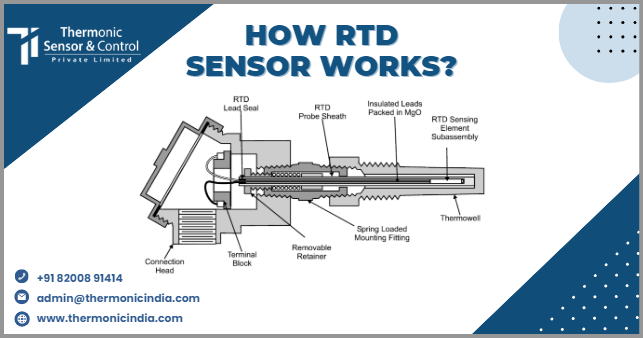
RTD (Resistance Temperature Detector) sensors work based on the principle that the electrical resistance of certain materials changes with temperature.
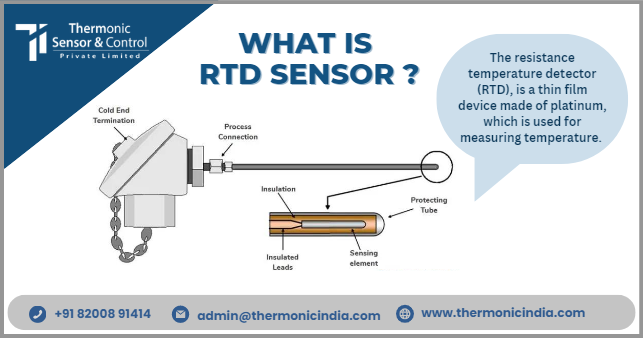
The resistance temperature detector (RTD), is a thin film device made of platinum, which is used for measuring temperature.