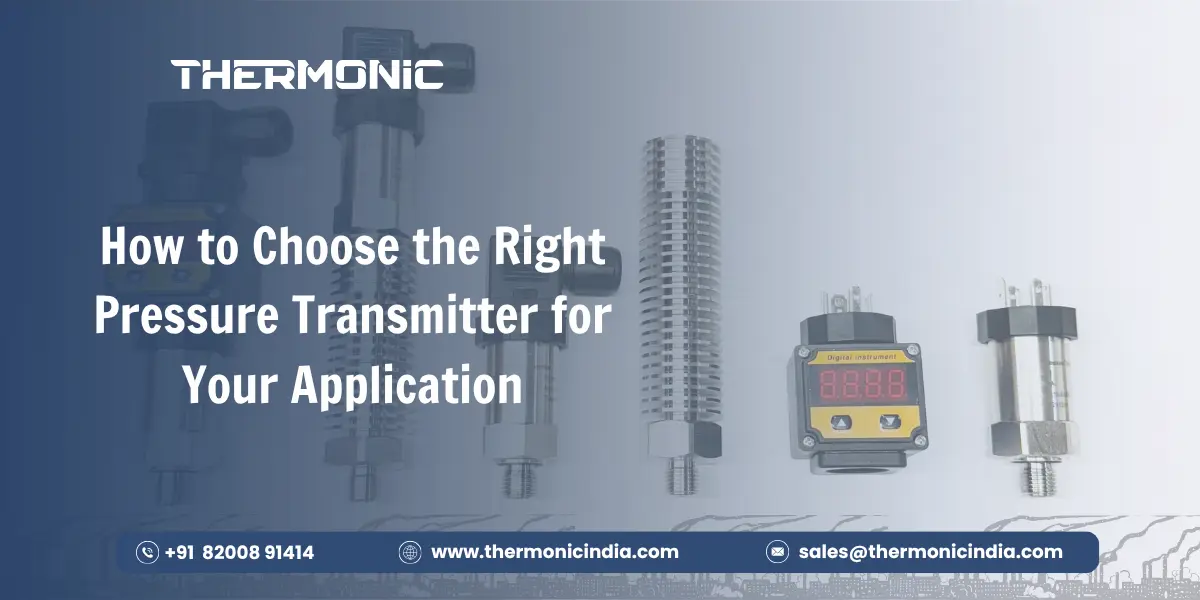
How to Choose the Right Pressure Transmitter for Your Application
Summarize this blog post with:


Accurate pressure measurement is critical in modern industrial operations. From monitoring boiler pressure in power plants to controlling fluid flow in chemical processing units, pressure transmitters play a vital role in ensuring process efficiency, safety, and product quality.
Selecting the wrong pressure transmitter can lead to inaccurate readings, process disruptions, equipment damage, increased maintenance costs, and even safety risks. This is why choosing the right device for your specific application should never be an afterthought. The financial impact of instrumentation and equipment failures can be substantial.
According to the Siemens True Cost of Downtime report, unplanned downtime costs the world’s largest manufacturers approximately $1.4 trillion annually , highlighting the importance of reliable measurement and control devices throughout industrial operations. A properly selected pressure transmitter helps minimize process interruptions, improve efficiency, and support long-term equipment reliability.
Whether you are looking for a pressure transmitter supplier for factories, an industrial pressure transmitter supplier, or a customized pressure transmitter supplier for specialized applications, understanding the key selection criteria can help you make an informed decision.
In this guide, we will explore the essential factors you should consider before selecting a pressure transmitter and how the right choice can improve operational reliability and long-term performance.
What Is a Pressure Transmitter?
A pressure transmitter is an electronic instrument that measures pressure and converts it into a standardized electrical signal that can be monitored, displayed, or processed by control systems.
These devices are widely used in industries such as power generation, water treatment, pharmaceuticals, food processing, oil and gas, chemical manufacturing, and HVAC systems.
Definition and Working Principle
A pressure transmitter senses the pressure exerted by gases, liquids, or steam through a sensing element. The measured pressure is then converted into an electrical output signal that can be transmitted to a PLC, DCS, SCADA, or monitoring system.
Common output signals include:
- 4-20 mA
- 0-10V
- HART Communication
- Modbus RTU
- RS485
These signals allow operators to monitor process conditions in real time and make informed operational decisions.
Common Types of Pressure Transmitters
Gauge Pressure Transmitters
Measure pressure relative to atmospheric pressure and are commonly used in industrial machinery and hydraulic systems.
Absolute Pressure Transmitters
Measure pressure relative to a perfect vacuum and are ideal for scientific and vacuum applications.
Differential Pressure Transmitters
Measure the pressure difference between two points and are widely used for flow measurement, filter monitoring, and tank level measurement.
Vacuum Pressure Transmitters
Designed specifically for applications operating below atmospheric pressure.
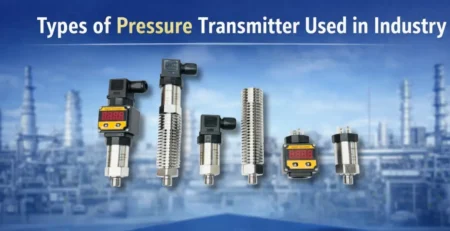
Also Read : Types of Pressure Transmitter Used in Industry
Why Choosing the Right Pressure Transmitter Matters
A pressure transmitter directly impacts process performance, equipment reliability, and operational safety.
Impact on Process Performance
Improved Accuracy
Accurate pressure readings help maintain process stability and consistent product quality.
Better Process Control
Reliable pressure monitoring enables precise control of pumps, compressors, boilers, and process equipment.
Reduced Downtime
Properly selected pressure transmitters minimize failures and unexpected shutdowns.
Risks of Incorrect Selection
Choosing the wrong transmitter can result in:
- Measurement errors
- Frequent calibration issues
- Premature sensor failure
- Increased maintenance costs
- Reduced production efficiency
- Equipment damage
Investing time in proper selection helps avoid these costly problems.
Key Factors to Consider When Selecting a Pressure Transmitter
1. Identify the Type of Pressure to Be Measured
The first step is determining the pressure measurement type required for your process.
Options include:
- Gauge pressure
- Absolute pressure
- Differential pressure
- Vacuum pressure
The correct pressure reference is essential for obtaining meaningful and accurate measurements.
2. Determine the Required Pressure Range
Pressure range selection significantly affects transmitter performance and lifespan.
Consider:
- Maximum operating pressure
- Normal working pressure
- Pressure spikes and overload conditions
- Future process expansion
Selecting a transmitter with the correct span ensures optimum accuracy and protects the sensor from overload damage.
3. Consider the Process Medium
The process medium influences material compatibility and sensor design.
Common media include:
- Liquids
- Gases
- Steam
- Corrosive chemicals
Before selecting a transmitter, ask:
- Is the medium corrosive?
- Is it viscous or abrasive?
- Does it contain solids?
- Will diaphragm seals be required?
Understanding the characteristics of the process fluid helps prevent premature transmitter failure.
4. Evaluate Operating Temperature Conditions
Temperature has a major impact on measurement accuracy and sensor life.
Factors to consider include:
Process Temperature
The temperature of the fluid or gas being measured.
Ambient Temperature
The surrounding environmental temperature.
Temperature Compensation Requirements
Some applications require compensation features to maintain accuracy across varying temperatures.
Common Challenges
- High-temperature applications
- Outdoor installations
- Thermal fluctuations
- Steam service environments
Applications involving boilers and power generation often require transmitters designed for elevated temperatures.
5. Check Material Compatibility
Material selection is crucial when dealing with aggressive or corrosive media.
Wetted Materials Selection
Stainless Steel 304
Suitable for general industrial applications.
Stainless Steel 316
Offers improved corrosion resistance and is commonly used in process industries.
Hastelloy
Excellent resistance to harsh chemicals and acids.
Titanium
Ideal for highly corrosive and marine environments.
Why Material Selection Matters
Proper material compatibility provides:
- Better corrosion resistance
- Longer service life
- Reliable measurement performance
- Reduced maintenance costs
6. Understand Accuracy Requirements
Different industries require different levels of measurement accuracy.
Common Accuracy Levels
- ±0.5%
- ±0.25%
- ±0.1%
Applications Requiring High Accuracy
Pharmaceutical Industry
Precise pressure control is essential for product consistency and compliance.
Food Processing
Maintains process quality and hygiene standards.
Chemical Manufacturing
Ensures process stability and safety.
Selecting the appropriate accuracy level prevents unnecessary costs while meeting process requirements.
7. Choose the Appropriate Output Signal
The transmitter must be compatible with your control and monitoring systems.
Common Output Options
- 4-20 mA
- 0-10V
- RS485
- Modbus RTU
- HART Protocol
Selection Considerations
PLC Compatibility
Ensure seamless integration with existing automation systems.
DCS Integration
Large process plants often require compatibility with distributed control systems.
Communication Requirements
Consider future scalability and remote monitoring needs.
8. Consider Environmental Conditions
Industrial environments can expose transmitters to harsh operating conditions.
Factors to Evaluate
- Dust
- Moisture
- Vibration
- Hazardous areas
Protection Ratings
IP65
Protection against dust and water jets.
IP67
Protection against temporary immersion.
IP68
Protection against continuous immersion.
Selecting the appropriate protection rating improves reliability and durability.
9. Process Connection Requirements
The process connection must match the existing system design.
Common Process Connections
- BSP Thread
- NPT Thread
- Tri-Clamp
- Flanged Connections
Selection Tips
- Ensure compatibility with existing systems
- Verify pressure rating requirements
- Consider maintenance accessibility
- Follow industry standards
10. Certifications and Industry Standards
Certain industries require certified instruments for compliance and safety.
Common Certifications
- ATEX
- IECEx
- CE
- RoHS
Industries Requiring Certification
Oil & Gas
Hazardous area approvals are often mandatory.
Chemical Plants
Explosion-proof instrumentation may be required.
Pharmaceutical Manufacturing
Compliance with industry standards is critical.
Pressure Transmitter Selection Checklist
Before purchasing, ask the following questions:
- What pressure type am I measuring?
- What is the operating pressure range?
- What is the process medium?
- What are the operating temperatures?
- Which material is compatible?
- What accuracy is required?
- What output signal is needed?
- Are any certifications required?
Answering these questions will simplify the selection process and improve long-term performance.
Common Mistakes to Avoid When Choosing a Pressure Transmitter
Mistake 1: Selecting the Wrong Pressure Range
This can reduce accuracy and shorten sensor life.
Mistake 2: Ignoring Temperature Effects
Temperature variations can significantly impact measurement performance.
Mistake 3: Overlooking Material Compatibility
Corrosion is one of the leading causes of pressure transmitter failure.
Mistake 4: Choosing Insufficient Accuracy
Low-accuracy devices may not meet process requirements.
Mistake 5: Ignoring Environmental Conditions
Dust, moisture, vibration, and hazardous environments should always be considered.
Industry-Specific Pressure Transmitter Recommendations
Water Treatment Plants
Recommended features:
- Corrosion-resistant designs
- Reliable long-term performance
- Moisture-resistant construction
Chemical Processing
Recommended features:
- Chemical-resistant wetted parts
- High accuracy
- Superior material compatibility
Food & Beverage Industry
Recommended features:
- Hygienic process connections
- Stainless steel construction
- Easy cleaning and maintenance
Hydraulic Systems
Recommended features:
- High-pressure capability
- Vibration resistance
- Rugged construction
Also Read : Best RTD Sensors for Industrial Temperature Monitoring Applications
Why Choose Thermonic India Pressure Transmitters?
As one of the trusted pressure transmitter suppliers in India, Thermonic India provides reliable pressure measurement solutions for a wide range of industrial applications.
Whether you need a pressure transmitter supplier for power plants, an industrial pressure transmitter supplier, or a customized pressure transmitter supplier, our team delivers products designed for performance and durability.
Features
- High measurement accuracy
- Robust industrial construction
- Multiple output options
- Wide pressure ranges
- Customization support
Applications
- Process industries
- Boilers
- Water treatment
- Hydraulic systems
- OEM machinery
- Power plants
- Chemical industries
Conclusion: Need Help Selecting the Right Pressure Transmitter for Your Application?
Choosing the right pressure transmitter requires careful evaluation of pressure type, pressure range, process medium, temperature conditions, material compatibility, accuracy requirements, communication protocols, and environmental factors.
Matching transmitter specifications to your application ensures reliable performance, improved safety, reduced maintenance costs, and enhanced process efficiency.
If you are planning to buy pressure transmitter solutions for industrial applications, consulting experienced experts can help you avoid costly selection mistakes and maximize equipment performance.
Contact Thermonic India today for expert guidance and customized pressure measurement solutions tailored to your specific industry requirements.