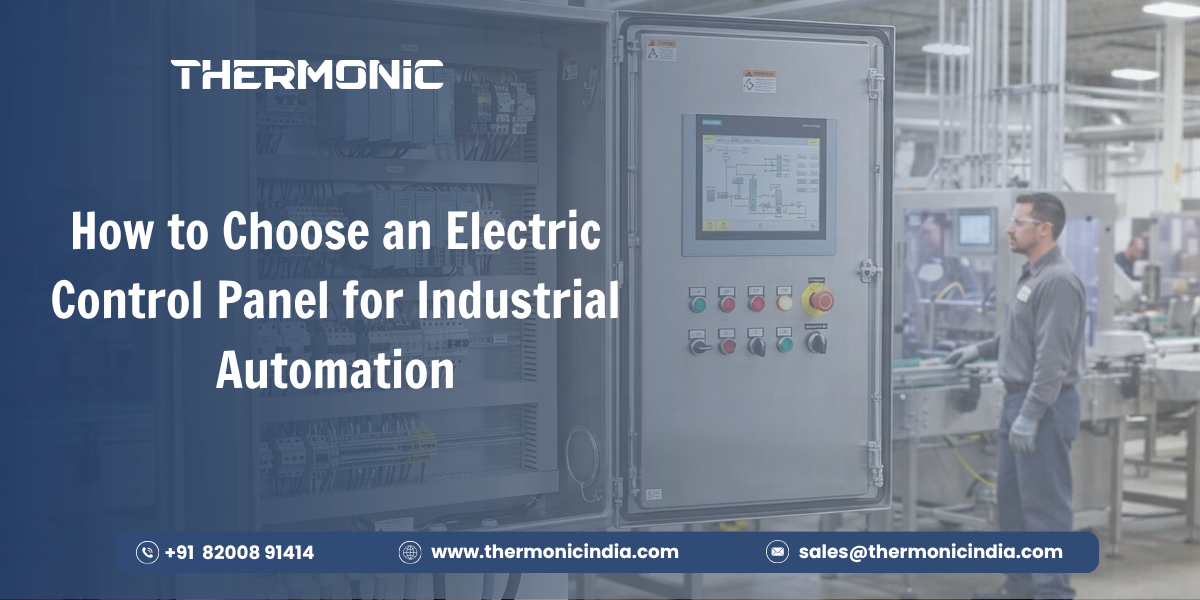
How to Choose an Electric Control Panel for Industrial Automation
Summarize this blog post with:


Introduction
Choosing the right electric control panel starts with understanding your machine, electrical load, automation requirements, operating environment, safety needs, and future expansion plans. A suitable industrial electric control panel should provide reliable control, protection, monitoring, and easy maintenance while supporting the specific requirements of your manufacturing process.
Industrial automation is also becoming increasingly important for manufacturers. Rockwell Automation’s 2025 State of Smart Manufacturing report surveyed more than 1,500 manufacturers across 17 countries and reported strong investment in smart manufacturing technologies across Asia Pacific.
This makes proper control panel selection important for manufacturers planning to automate or upgrade their production systems.
What Is an Electric Control Panel?
An electric control panel is an enclosure that houses electrical, control, protection, and automation components used to operate and monitor industrial equipment. Depending on the application, it can control motors, heaters, pumps, valves, machines, production lines, and process equipment.
A control panel can include components such as:
- PLCs and automation controllers
- MCBs, MCCBs, and fuses
- Contactors and relays
- Variable frequency drives
- HMIs
- Power supplies
- Terminal blocks
- Sensors and measurement devices
- Communication equipment
The exact configuration depends on the application. For example, a simple machine may require basic motor and safety controls, while an automated production line may need PLCs, HMIs, VFDs, sensors, communication interfaces, and multiple protection devices.
Electric Control Panel vs Automation Control Panel
An electric control panel generally refers to a panel containing electrical control and protection equipment. An automation control panel typically includes additional automation components such as PLCs, HMIs, communication systems, and process instrumentation.
Common panel types include:
| Panel Type | Typical Application |
| PLC Control Panel | Machine and process automation |
| MCC Panel | Motor control and distribution |
| PCC Panel | Power control and distribution |
| VFD Panel | Variable-speed motor applications |
| Process Control Panel | Industrial process monitoring and control |
| Machine Control Panel | Dedicated machine automation |
How Does an Electric Control Panel Work?
An electric control panel receives electrical power and distributes it to the required circuits and equipment. Protection devices help protect circuits, while control components manage the operation of connected loads.
In an automated system, the process generally works as follows:
- Power enters the panel through the incoming supply.
- Protection devices provide circuit protection and isolation.
- Control components switch and manage electrical loads.
- The PLC or controller processes programmed automation logic.
- Sensors send information about process conditions to the controller.
- Output devices operate motors, valves, heaters, and other equipment.
- The HMI allows operators to monitor parameters, alarms, and machine status.
This combination allows manufacturers to control processes more consistently while providing operators with information about machine operation.
Key Components of an Industrial Electric Control Panel
1. PLC and Automation Controller
A PLC is commonly used to execute automation logic and coordinate machine operations.
When selecting a PLC, consider:
- Number of digital inputs and outputs
- Analogue input and output requirements
- Processing requirements
- Communication interfaces
- Expansion requirements
- Compatibility with sensors and other equipment
Leave sufficient capacity for future expansion where the application is expected to grow.
2. Circuit Breakers and Protection Devices
Protection devices help isolate faults and protect electrical circuits and connected equipment.
Depending on the design, an electric control panel may include:
- MCBs
- MCCBs
- Fuses
- Overload protection
- Short-circuit protection
- Surge protection
The ratings should be selected according to the actual electrical design and applicable requirements rather than simply choosing the largest available device.
3. Contactors and Relays
Contactors are commonly used for switching motors and other electrical loads. Relays can be used for control logic, signalling, isolation, and interlocking.
Correct selection should consider:
- Load type
- Current rating
- Switching frequency
- Coil voltage
- Control circuit requirements
4. Variable Frequency Drives
A VFD controls the speed of compatible AC motors by varying the electrical frequency and voltage supplied to the motor.
VFDs can be useful where an application requires:
- Variable motor speed
- Controlled acceleration and deceleration
- Process speed adjustment
- Improved motor control
- Reduced mechanical stress during starting
The VFD should be selected according to motor rating, application duty, operating conditions, and control requirements.
5. Human Machine Interface
An HMI provides an interface between the operator and the automation system.
It can display:
- Machine status
- Temperature and pressure values
- Production parameters
- Alarm messages
- Fault conditions
- Operating settings
For larger systems, HMI data can also be integrated with SCADA or other supervisory systems.
Also Read : Where Can I Buy a Reliable Digital Temperature Gauge Online in India?
6. Power Supply and Distribution Components
Control panels may include SMPS units, transformers, terminal blocks, busbars, and other distribution components.
These components help provide appropriate power to control circuits and distribute electrical power safely within the panel.
7. Sensors and Measurement Devices
Sensors provide information that the control system can use to monitor or regulate the process.
Examples include:
- Temperature sensors
- Pressure sensors
- Level sensors
- Proximity sensors
- Flow sensors
For temperature-controlled processes, RTDs and thermocouples can provide measurement inputs to the control system.

10 Factors to Consider When Choosing an Electric Control Panel
1. Understand Your Industrial Application
Start by identifying exactly what the panel needs to control.
Consider:
- Machine or process type
- Number of machines
- Motors and other loads
- Required automation functions
- Operating sequence
- Required measurements
- Operator requirements
A panel designed for a single machine may have very different requirements from one controlling an entire production line.
2. Determine the Required Electrical Load
Electrical load is one of the most important factors when specifying a panel.
Review:
- Supply voltage
- Current requirements
- Connected load
- Motor ratings
- Number of circuits
- Starting currents
- Future load requirements
Accurate load calculations help determine suitable protection devices, conductors, switching equipment, and panel ratings.
3. Choose the Right Panel Type
Select the panel configuration based on the application’s primary function.
For example:
- PLC panel: suitable for machine and process automation
- MCC panel: suitable for multiple motor control applications
- PCC panel: suitable for power control and distribution
- VFD panel: suitable for applications requiring variable-speed motor control
- Process control panel: suitable for monitoring and controlling industrial processes
The right selection depends on the required functions, electrical characteristics, automation complexity, and expansion requirements.
4. Consider Enclosure Material and Protection Rating
The enclosure protects internal components from the surrounding environment.
Common choices include:
- Mild steel
- Stainless steel
- Powder-coated enclosures
The required IP rating should be selected according to the installation environment and applicable design requirements.
Consider protection against:
- Dust
- Moisture
- Chemicals
- Heat
- Corrosive substances
IEC 61439-1 establishes general requirements for low-voltage switchgear and controlgear assemblies, including construction requirements, technical characteristics, and verification requirements.
5. Check the Environmental Conditions
Environmental conditions can significantly affect panel selection.
Check:
- Ambient temperature
- Humidity
- Dust exposure
- Chemical exposure
- Indoor or outdoor installation
- Corrosive atmosphere
- Hazardous-area requirements, where applicable
For demanding environments, enclosure construction, cooling, ventilation, component selection, and protection measures should be considered together.
6. Evaluate Automation and Communication Requirements
Modern industrial systems may require communication between PLCs, HMIs, drives, sensors, SCADA systems, and other equipment.
Consider:
- PLC compatibility
- HMI integration
- SCADA connectivity
- Ethernet connectivity
- Industrial communication protocols
- Remote monitoring requirements
- Data exchange between machines
Planning these requirements during panel design can help avoid expensive modifications later.
7. Plan for Safety and Protection
Safety should be considered during the panel design stage.
Depending on the application, evaluate:
- Short-circuit protection
- Overload protection
- Emergency-stop circuits
- Earthing
- Isolation
- Surge protection
- Proper cable management
- Component separation
- Access requirements
The final design should follow the relevant electrical and machine safety requirements applicable to the installation.
8. Consider Panel Layout and Accessibility
A well-planned layout makes inspection, troubleshooting, and maintenance easier.
Consider:
- Component arrangement
- Wiring space
- Cable entry
- Heat dissipation
- Terminal accessibility
- Maintenance clearance
- Component labelling
- Separation of power and control wiring where required
A crowded panel can make maintenance more difficult and can complicate future modifications.
9. Think About Future Expansion
Industrial requirements can change as production capacity increases.
Allow for:
- Spare PLC I/O
- Additional terminals
- Spare enclosure space
- Additional communication requirements
- Future machine integration
- Modular expansion
Planning for expansion during the initial design can reduce the need for major panel modifications later.
10. Check Quality, Standards and Documentation
When comparing an electric control panel manufacturer or electric control panel supplier, do not consider only the purchase price.
Ask about:
- Component quality
- Electrical drawings
- Wiring documentation
- Testing procedures
- Inspection records
- Component datasheets
- Labelling
- Applicable standards
- Technical support
IEC guidance on specifying assemblies emphasises defining assembly characteristics and options according to the specific application.
How to Select the Right Control Panel for Your Industry
Manufacturing
Manufacturing plants may require panels for:
- Machine automation
- Motor control
- Production-line integration
- Process monitoring
Plastic Processing
Plastic processing equipment may require coordinated control of:
- Temperature
- Motors
- Heaters
- Production processes
The panel should be designed around the machine’s actual control sequence and environmental conditions.
Chemical Industries
Chemical applications can require attention to:
- Process automation
- Environmental protection
- Instrumentation
- Temperature and pressure monitoring
Where chemicals or corrosive conditions are present, enclosure and component selection require particular attention.
Pharmaceutical Industries
Pharmaceutical applications may require:
- Process monitoring
- Temperature and pressure control
- Suitable enclosure construction
- Consistent documentation
- Appropriate operating environments
Food Processing
Food processing applications may require:
- Temperature control
- Process monitoring
- Hygiene-focused equipment selection
- Stainless-steel construction in suitable applications
Common Mistakes When Choosing an Electric Control Panel
Avoid these common selection mistakes:
- Choosing a panel only because it has a lower initial price
- Ignoring the operating environment
- Underestimating electrical load
- Selecting components without checking compatibility
- Leaving insufficient wiring space
- Ignoring heat dissipation
- Selecting an unsuitable IP rating
- Not planning for future expansion
- Making maintenance access difficult
- Failing to define documentation and testing requirements
A lower initial price does not necessarily mean a lower total cost. Component quality, maintenance requirements, downtime, expansion, and technical support can also affect the long-term value of an industrial control system.
Also Read : Temperature Sensor Solutions for Plastic Processing Industries
How Much Does an Industrial Control Panel Cost?
There is no single price for an industrial electric control panel because the configuration varies significantly between applications.
The main cost factors include:
- Panel size
- Enclosure material
- PLC requirements
- HMI requirements
- Number of electrical components
- VFD requirements
- Automation complexity
- Protection rating
- Customisation
- Testing and documentation
For an accurate quotation, provide the manufacturer with information such as supply voltage, load details, motor ratings, I/O requirements, control philosophy, enclosure requirements, and application environment.
Electric Control Panel Selection Checklist
Before finalising your panel, check whether you have defined:
- Application requirements
- Electrical load
- Panel type
- PLC and I/O requirements
- Protection devices
- Enclosure material
- IP rating
- Environmental conditions
- Communication requirements
- Safety requirements
- Future expansion
- Testing and documentation requirements
This checklist can help your engineering or procurement team create a clearer specification before approaching electric control panel suppliers.
Why Work With an Experienced Control Panel Manufacturer?
An experienced electric control panel manufacturer can help translate your machine or process requirements into an appropriate panel configuration.
When evaluating manufacturers, ask:
- Can the panel be customised for my application?
- Which components will be used?
- What protection rating is provided?
- Will electrical drawings be supplied?
- Is the panel tested before delivery?
- Can the design accommodate future expansion?
- What technical support is available?
For industrial applications, the manufacturer should understand not only panel assembly but also electrical loads, automation requirements, component compatibility, wiring, testing, and the operating environment.
FAQs
What is an electric control panel used for?
An electric control panel houses electrical, protection, control, and automation components used to operate industrial equipment. Depending on its design, it can control motors, machines, heaters, pumps, valves, and automated production processes.
How do I choose the right control panel for my machine?
Start with the machine’s electrical load, voltage, current, number of motors, automation requirements, sensors, operating environment, safety requirements, and future expansion needs. These factors help determine the panel type, components, enclosure, and protection requirements.
What components are used in an industrial control panel?
Common components include PLCs, MCBs, MCCBs, fuses, contactors, relays, VFDs, HMIs, power supplies, terminal blocks, busbars, sensors, and communication equipment. The exact components depend on the application.
What IP rating should an industrial control panel have?
The required IP rating depends on the installation environment and the level of protection needed against solid particles and water. Dust, moisture, outdoor installation, chemicals, and cleaning conditions should be considered before selecting the enclosure rating.
What is the difference between a PLC panel and an MCC panel?
A PLC panel primarily supports automation and control logic using a programmable controller, while an MCC panel is generally used to control and distribute power to multiple motors. Some industrial systems may use both types as part of the same automation architecture.
How much does an industrial control panel cost?
The cost depends on panel size, enclosure material, PLC and HMI requirements, VFDs, electrical components, automation complexity, protection rating, customisation, testing, and documentation. A detailed technical specification is needed for an accurate quotation.
Why is panel layout important in industrial automation?
Panel layout affects wiring, heat dissipation, component accessibility, troubleshooting, maintenance, and future modifications. A well-organised layout can make inspection and servicing easier and provide appropriate space for system expansion.
Can an industrial control panel be customised?
Yes. Industrial control panels can be configured around application-specific requirements such as electrical loads, PLC I/O, HMI, VFDs, sensors, communication systems, enclosure requirements, and environmental conditions.
What information should I provide to a control panel manufacturer?
Provide the supply voltage, load details, motor ratings, number of machines, I/O requirements, control philosophy, required communication protocols, enclosure requirements, installation environment, safety requirements, and future expansion plans. Electrical drawings or machine specifications can also help the manufacturer prepare a suitable design.

Choose a Control Panel That Fits Your Process
Choosing an electric control panel is not simply about selecting an enclosure and filling it with electrical components. The panel should be designed around your application’s electrical load, automation requirements, environment, safety needs, maintenance requirements, and future expansion.
For manufacturers, working with suitable electric control panel manufacturers and electric control panel suppliers can help ensure that the final system is aligned with the actual production requirements.
If you are planning a new automation project or upgrading an existing system, start by defining your application and technical requirements before selecting the panel configuration.